A CP504 shows up in a plain envelope with the word levy printed in bold, and almost everyone who calls us wants the same question answered first. Is this the last warning. The honest answer is close, but not quite, and that gap decides what you should do this week. We work these notices every month in Peoria and Las Vegas, and the taxpayers who come out of it cleanest are the ones who understood exactly which letter they were holding before they picked up the phone.
The Short Answer on Whether CP504 Is the Final Notice
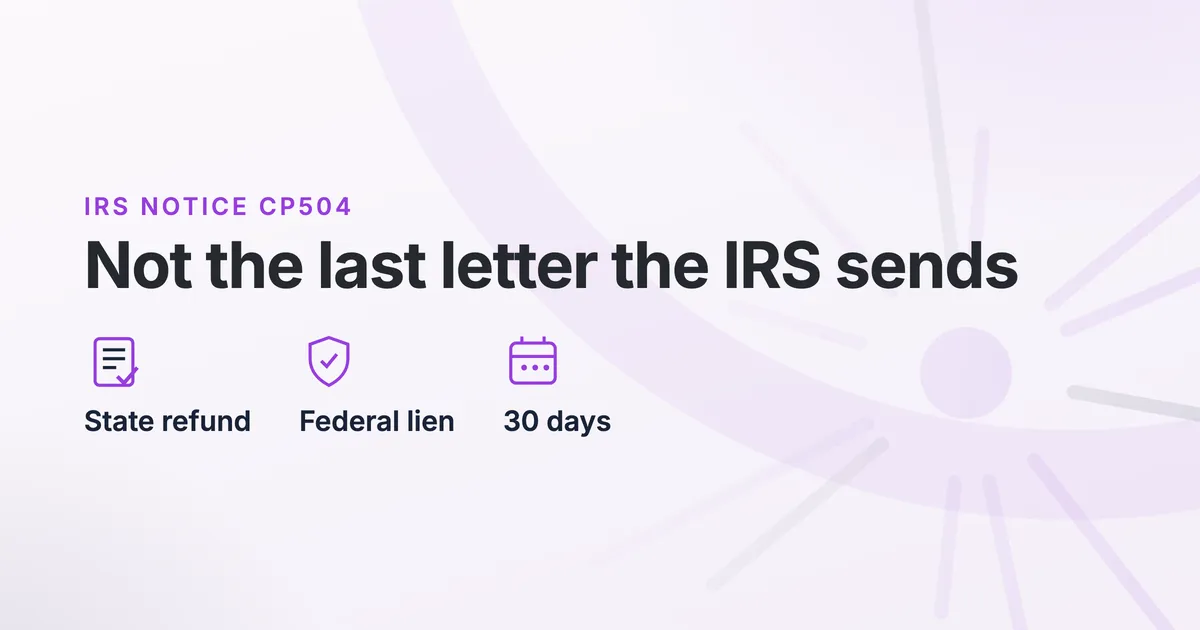
A CP504 is a Notice of Intent to Levy. It is the last letter in the automated balance due series, so in that sense the quiet part of the process is over. But it is not the Final Notice of Intent to Levy and Notice of Your Right to a Hearing, which is the letter that unlocks the IRS power to take wages, bank funds, and other property. CP504 does authorize the IRS to take your state tax refund, and it puts a federal tax lien squarely on the table.
So the accurate way to read it is this. One more letter is coming, and that letter carries your appeal rights. The window between the two is the most useful stretch of time you will get, because you can still choose the resolution rather than react to a collection action. People who treat CP504 as the end panic. People who treat it as a bill they can shuffle to the bottom of the pile lose the window entirely. Neither response serves them.
What Does IRS Notice CP504 Mean
CP504 means the IRS has assessed a balance, sent you earlier reminders, and received nothing back that satisfied the account. The notice states the amount due, adds the accrued penalty and interest, and tells you the IRS intends to levy if you do not resolve the balance. It is generated by the automated collection system, not by a person who reviewed your circumstances, which is why the tone reads harsher than your actual situation may warrant.
If you never saw the earlier letters, you are not unusual. The CP501 and CP503 reminders go to the address on your last filed return, and a move, a mail forwarding gap, or a stack of unopened envelopes explains most of the cases we take. Our walkthrough of what a CP501 letter really means covers the earlier stage, and the side by side breakdown in IRS notices explained for CP501 and CP504 shows how the series escalates.
The 30 Day Window Printed on the Notice
The notice gives you 30 days from the date on the letter, not 30 days from the day you opened it. That distinction has cost people two or three usable weeks. Check the date in the upper right corner first, then count. If more than half the window is gone, tell whoever helps you that up front, because it changes which resolution you can realistically get on file in time.
How Serious Is a CP504
Serious enough that the account has left the reminder stage and entered enforced collection planning. The IRS can seize your state tax refund on the strength of this notice alone. It can also file a Notice of Federal Tax Lien, which attaches to everything you own and shows up when you try to sell a house, refinance, or get business credit. A lien filed at this stage is one of the harder things to unwind later.
What it is not is a bluff or a form letter. The automated system that generated it does move accounts forward on a schedule. Silence is read as an answer, and the answer it reads is that there is nothing to collect voluntarily. Our piece on what happens when IRS notices go ignored traces where those accounts end up.
Is There Another Notice After CP504
Yes. Before the IRS can levy wages, bank accounts, or most other property, it has to send a final notice carrying appeal rights. Depending on which part of the IRS holds your account, that letter arrives as an LT11, a Letter 1058, or a CP90. All three say the same thing in different formats. The IRS intends to levy, and you have 30 days to request a Collection Due Process hearing.
That final notice is the one that genuinely changes your legal position, because requesting the hearing in time generally suspends levy action while the appeal is pending. If you have already received one of those letters rather than a CP504, read our guide to an LT11 notice and what it means for your assets instead, because your clock is shorter and your options are narrower.
How Long Do You Have to Respond to a CP504
Thirty days from the notice date. Nothing dramatic happens at 11 PM on day 30, but the account rolls forward in the automated queue and the next letter gets generated. What you want on file before that happens is a resolution the IRS can see, because an account with a pending agreement is treated differently from an account that has gone quiet.
There is also a practical reason to move early. Every resolution path we file requires documents from you, and gathering pay stubs, bank statements, and expense records takes longer than anyone expects. Starting on day 25 usually means starting late.
Your Four Options When a CP504 Lands
Four paths cover almost every CP504 case that reaches us. Which one fits depends on what you owe, what you earn, and what you actually have left after necessary living expenses.
Pay the Balance in Full
If the number is payable, paying it closes the account and stops everything else. It is worth checking the math first. Penalty and interest accrue on the tax, and a return prepared without a credit you qualified for can inflate the balance. We check the assessment before we recommend paying it.
Set Up an Installment Agreement
Monthly payments keep the account current and keep enforced collection off the table while you pay. The terms depend on the balance and your ability to pay, and the paperwork burden ranges from a short online form to a full financial disclosure. Our comparison of installment agreements and offers in compromise explains which one the IRS is likely to accept in your situation.
Ask for Currently Not Collectible Status
If your income barely covers necessary living expenses, the IRS can place the account in a hardship status and stop active collection. It is not forgiveness and interest keeps running, but it buys real breathing room. The requirements are laid out in our page on currently not collectible status in Illinois and Nevada.
Preserve Your Appeal Rights
If you disagree with the balance, or the return behind it was never really yours to owe, say so before the final notice window closes. Appeal rights are use them or lose them. The detailed response walkthrough in what to do when you receive a CP504 covers the response mechanics step by step.
CP504 in Illinois and Nevada
Federal collection works the same in both states, but the practical picture is not identical. Illinois taxpayers have a state refund that CP504 can reach, which makes the notice bite sooner. Nevada has no state income tax, so there is no state refund to take, and the account tends to move toward the final notice instead.
We keep offices in Peoria and Las Vegas, and we handle these accounts by phone, transcript, and power of attorney, which means the meeting you are dreading with the IRS is a meeting you never take. Our clients never meet with the IRS. That is not a slogan we picked up somewhere. It is how the representation works.
Where to Start If Your CP504 Is on the Kitchen Table
Pull the notice out and find the date. Then find every other IRS letter you have, opened or not, and put them in date order. That stack tells us where your account actually sits, and it is the first thing we ask for. From there we pull your IRS transcripts, confirm what has been assessed, and tell you which of the four paths is realistic before the next letter is generated.
If the clock is already running, bring us what you have and let us read it with you. A free consultation in Peoria, Illinois or Las Vegas, Nevada starts with telling us what the IRS sent you.
FAQ
Is there another notice after CP504?
Yes. The IRS must send a final notice with appeal rights before it can levy wages, bank accounts, or most property. That letter arrives as an LT11, a Letter 1058, or a CP90, and it gives you 30 days to request a Collection Due Process hearing.
What does IRS notice CP504 mean?
It means the IRS has assessed a balance, sent earlier reminders that went unanswered, and now intends to levy. On the strength of CP504 alone the IRS can take your state tax refund and file a Notice of Federal Tax Lien.
How long do you have to respond to a CP504?
Thirty days from the date printed on the notice, not from the day it reached you. Check the date in the upper right corner and count from there.
How serious is a CP504?
Serious. The account has moved out of the reminder stage into enforced collection planning. A state refund seizure and a federal tax lien are both available to the IRS at this point, and the next letter opens the door to wage and bank levies.

Written by
William Sharpe, E.A., C.T.R.S.
Founder & Certified Tax Resolution Specialist
William has been in the tax business since he was 8 years old, starting in the mail room of the family enterprise. He began filing tax returns in 1999 and spent decades shadowing his grandfather, founder Bill Sharpe. In 2005 he teamed with Bill & Deborah Sharpe to open Total Income Tax — today the busiest tax office in Peoria — and in 2016 he founded Total IRS Relief to help taxpayers resolve their IRS and Illinois tax struggles.
Meet the teamNeed help with your case?
Talk to an Enrolled Agent. Free 15-minute consultation, no obligation.