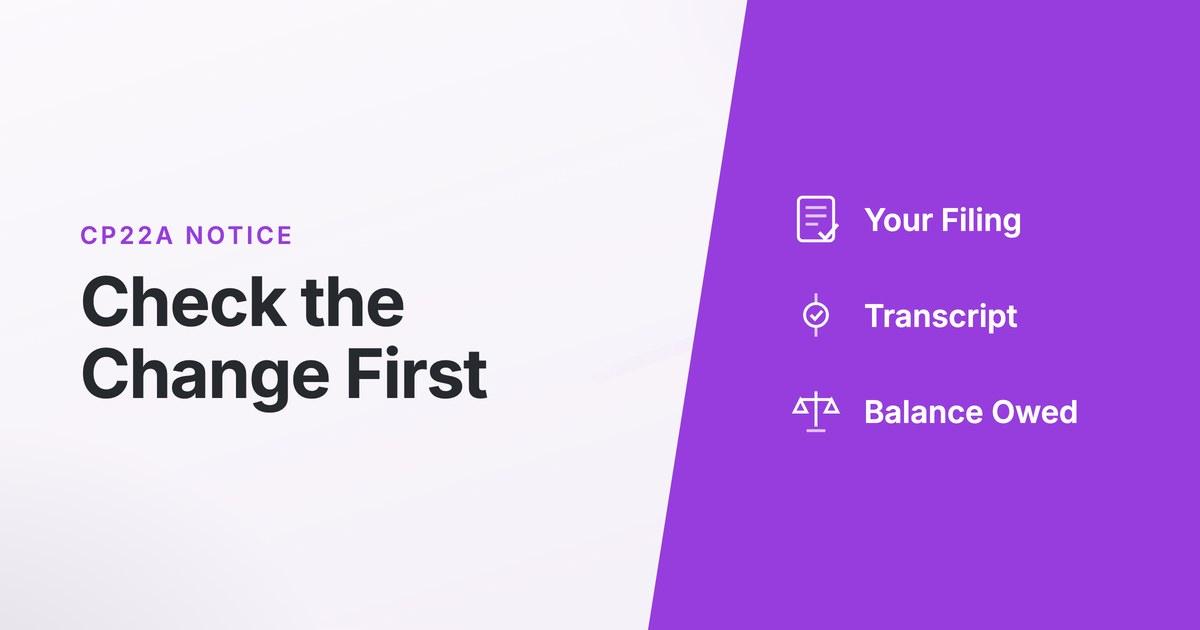
Check the change before you pay. A CP22A means the IRS made changes to your return, based on information you gave it such as an amended return, and that you owe because of them. If the change is right, pay by the date on the notice or set up a plan. If it isn’t, call the number printed on it.
If you’re holding a CP22A and want a licensed representative to check the change before any money moves, call us at 877-924-1040 or send the notice through our contact page.
Why Am I Getting a Letter From the IRS Saying I Owe Money?
With a CP22A, it’s because the IRS changed your return and the change left a balance. The IRS’s CP22A page sums it up in two sentences. The IRS made changes to your return, and you owe because of them. Its sample notice says the change was based on information you provided.
That’s what separates it from a CP2000. A CP2000 is a proposal you can answer before anything changes, while a CP22A reports a change that’s already been made. Our guide to tracking the amended return first covers the wait before a notice like this shows up.
What the CP22A Shows
The notice is short, and each section on it covers one thing. The IRS sample CP22A runs three pages, with the change and the bill on page one and the payment options behind it.

The change, the new balance and the date to pay by, all on page one.
The Change the IRS Made
Page one lists what the IRS corrected. In the IRS’s sample, it changed the filing status to head of household and the total exemption amount, based on the information the taxpayer provided.
The Balance, Penalty and Interest
A billing summary shows the balance before the change, the increase or decrease in tax and interest, and the amount due. Interest keeps accruing if you don’t pay in full by the date on the payment coupon, and the IRS says a late payment penalty follows if you can’t pay the full amount.
The Pay-By Date
The notice gives a date to pay by, and the sample asks you to pay by it to avoid additional penalty and interest. If you already paid or made a payment arrangement within the past 21 days, the sample says to disregard the notice.
Checking the Change Against What You Filed
Compare the change with your amended return line by line. If you filed a Form 1040-X, the notice should reflect the figures you sent, and a balance you didn’t expect can mean the IRS read one of your entries differently than you intended.
The IRS’s tax account transcript shows changes made after you filed your original return, and that’s the record we work from. Checking the change against your IRS transcript tells us whether the balance on the notice matches the account, and whether any penalty on it belongs there.
If the year needs another correction, the IRS says it goes on a new Form 1040-X. Our post on how far back you can amend a tax return covers the time limits before you file one.
Answering a CP22A
There’s nothing to fill out, because a CP22A is a notice and not a form. If you agree, pay the amount by the date printed on it, online or by check with the payment stub, and correct your own copy of the return. If you can’t pay it all, the IRS points to a payment plan, a temporary collection delay or an offer in compromise.
If you disagree, call the number on the notice, with the notice and your return in front of you. Don’t let it sit, because the sample notice says the IRS will assume you agree if it doesn’t hear from you. And if you’ve called several times without an answer, the IRS lists the Taxpayer Advocate Service at 877-777-4778.
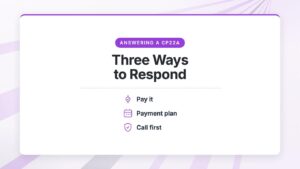
Pay it, ask for a plan or call first, depending on whether the change is right.
If the New Balance Is More Than You Can Pay
A payment plan is the usual answer, and the IRS’s CP22A page says plainly that you can arrange one. We negotiate an IRS installment agreement at a monthly figure you can actually carry, after the transcript confirms the balance.
The late payment penalty is a separate question. The IRS says that if you can’t pay because of circumstances beyond your control and you contact it by the payment due date, it may be able to remove the penalty. We also look at first-time abatement and reasonable cause when asking the IRS to remove the penalty.
Two Offices, One Way of Checking a CP22A
Clients in Peoria and Las Vegas get the same first step from us, a transcript pull before any payment decision. We’re a small, senior team of enrolled agents, licensed by the IRS with unlimited rights to represent taxpayers. You never meet with the IRS. We do.
If your letter turns out to be a different notice, our IRS notice guide lists the common ones. If it’s a CP22A and the balance surprised you, call 877-924-1040 with the notice and your amended return on hand.
FAQ
How do I fill out form CP22A?
You don’t, because a CP22A is a notice, not a form. If you agree with the change, pay by the date on the notice, online or with the payment stub. If you can’t pay in full, ask for a payment plan, and if you disagree, call the number printed on the notice.
Why am I getting a letter from the IRS saying I owe money?
If it’s a CP22A, the IRS changed your return based on information you sent, such as an amended return, and the change left a balance. Other IRS notices ask for money for other reasons, so check the notice number before deciding what to do.

Written by
William Sharpe, E.A., C.T.R.S.
Founder & Certified Tax Resolution Specialist
William has been in the tax business since he was 8 years old, starting in the mail room of the family enterprise. He began filing tax returns in 1999 and spent decades shadowing his grandfather, founder Bill Sharpe. In 2005 he teamed with Bill & Deborah Sharpe to open Total Income Tax — today the busiest tax office in Peoria — and in 2016 he founded Total IRS Relief to help taxpayers resolve their IRS and Illinois tax struggles.
Meet the teamNeed help with your case?
Talk to an Enrolled Agent. Free 15-minute consultation, no obligation.